
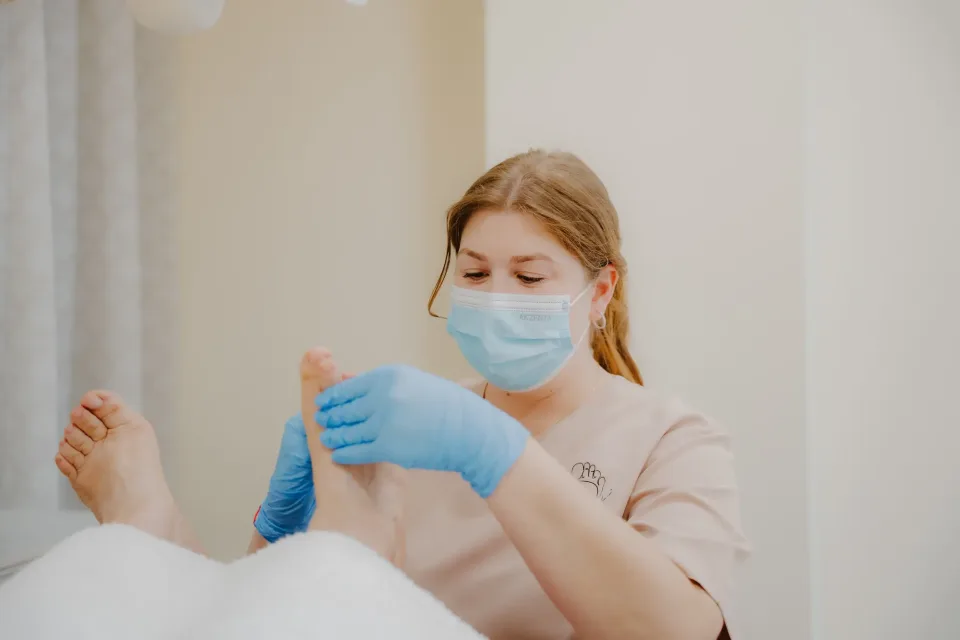
A dry heel and a fissure that hurts, opens or bleeds are not cared for in the same way. What you can do at home, what is best avoided and when to ask for an assessment.
Cracked heels that hurt need different care from a heel that is simply dry. If the skin is intact and the cracks are superficial, regular moisturising and suitable footwear can help. If a fissure is deep, opens when you walk or bleeds, it is worth asking for an assessment and avoiding filing it or applying irritating products to it.
If you have diabetes, loss of sensation or poor circulation, seek advice early about an open crack. Pus, redness that spreads, warmth or swelling need prompt healthcare attention; if there is also a fever, you feel generally unwell or the pain is severe enough to stop you bearing weight, seek urgent medical care.
Why heels crack
When you put weight on it, the heel pad compresses and spreads slightly. The skin around it needs some flexibility to follow that movement. When it is dry and thickened, it can split into small lines which, with repeated pressure, become deeper. These cracks are called heel fissures.
Long hours on your feet, pressure on the rim of the heel and footwear that is open at the back can all encourage them. Skin conditions such as eczema or psoriasis can also play a part. The appearance of cracks does not allow either of them to be diagnosed.
Hard skin and a fissure can occur together, but they raise different questions: with hard skin, the point is to find the excess pressure; with a fissure, it is also necessary to check whether the skin is open and how to protect it. If your problem is hard skin that keeps returning, you can read why a callus keeps coming back in the same spot.
How to tell dryness from a crack that needs an assessment
These signs help you decide when to seek advice; they do not replace an examination.
- Rough skin, with no wound and no significant pain: start gentle, regular care, and seek advice if it persists.
- A crack that hurts when you bear weight, opens or bleeds: protect it and ask for an assessment without scraping the area any further.
- Increasing redness, warmth, swelling or discharge: ask for prompt healthcare attention because of a possible infection.
- An open crack with diabetes, poor circulation or reduced sensation: seek advice early, even if it barely hurts.
Pain does not always match severity. A superficial fissure can be uncomfortable, while a person with reduced sensation can have an open lesion and hardly notice it.
What you can do at home if the skin is intact
Wash and dry gently
Use lukewarm water and a mild cleanser. Avoid very hot water and long soaks, which can make dryness worse. Dry without rubbing hard and pay attention to the spaces between the toes.
Moisturise the heel regularly
Apply an emollient cream following its instructions. Some products contain urea, which can help to moisturise and soften thickened skin; the choice depends on the state of the skin and is not a matter of always looking for the highest concentration.
Do not apply a product that stings or irritates. If there is an open crack, bleeding or a wound, ask for advice before using concentrated urea, acids or exfoliants on that area. Recommendations for dry, intact skin do not automatically carry over to a wound.
On intact skin, a small amount of petroleum jelly at night can help to retain moisture. If you wear socks, choose clean ones that are not tight, and avoid walking on surfaces where the product could make you slip. Do not spread cream between the toes if the area stays damp.
Check your footwear
Choose a shoe that fits well and protects the heel, without rubbing the crack. If sandals that are open at the back coincide with things getting worse, switch for a while to footwear that holds that area better. Also check whether you spend many hours standing on hard floors.
Keep up the care once the heel looks better. If you stop as soon as the visible dryness disappears, it can come back.
What to do if a crack bleeds
A bleeding fissure is a wound. Wash your hands and, if it is bleeding, apply direct, continuous pressure with gauze or a clean cloth. Once the bleeding has stopped, clean the area with water and cover it with a clean dressing that protects it from rubbing.
Do not cut the edges of the crack or try to close it with household glue. Avoid applying exfoliating cream inside the wound. If the bleeding does not stop, the lesion is deep or signs of infection appear, seek healthcare attention.
With diabetes, circulation problems or loss of sensation, a wound on the foot deserves an early assessment. You can read more about routine care in what to check on your feet every day if you have diabetes.
Why cream is sometimes not enough
Moisturising helps dry skin, but it may not resolve a fissure that is kept going by pressure, constant rubbing or significant thickening. There may also be a skin condition that needs a different approach.
That is why it helps to check what happens when you bear weight and what footwear you wear, as well as looking at the heel. One person may notice an improvement by changing their sandals and keeping up the moisturising; another needs a painful crack to be assessed and the care of the area adapted.
If the fissures keep returning or do not improve with gentle, regular care, ask for an assessment. There is no need to wait until the heel bleeds to seek advice.
What a podiatrist can do
The examination makes it possible to assess the depth of the fissure, the skin around it, the pressure areas and the factors that may hinder healing. If there is hardened skin, it may need to be reduced professionally; if there is a wound, the care is adapted to its state.
Chiropody includes assessing the skin and treating hard skin. With a cracked heel, the decision is not about removing all the hard skin: the healthy skin has to be protected, the fissure assessed and how to care for it afterwards explained.
If the examination suggests that the way pressure is distributed plays a part in the recurrences, a gait assessment may be indicated. Not every crack needs insoles. Where an infection, a skin disease or another problem that requires medical attention is suspected, the appropriate assessment is recommended.
What is best avoided
- Cutting hardened skin with blades, scissors or pliers.
- Filing a crack that is painful, inflamed, open or bleeding.
- Using corn removers, acids or strong exfoliants without checking whether they are suitable.
- Applying lemon, vinegar or other irritating substances inside a fissure.
- Repeating a product that stings or makes the skin worse.
If you have diabetes, neuropathy or poor circulation, ask how you should care for your hard skin before using files or products to remove it.
When to seek advice without waiting
Ask for an assessment if a crack hurts when you walk, bleeds, gets deeper or keeps coming back. Ask for prompt healthcare attention if the redness, swelling or warmth increases, or pus appears.
A fever, feeling generally unwell, bleeding that cannot be controlled or severe pain that stops you bearing weight require urgent medical care. In those situations, do not wait for a scheduled appointment to be confirmed.
Assessment of cracked heels in Altea
At the clinic we can assess the skin, the hard skin and the weight-bearing areas to decide what care your heel needs. Bring the footwear you usually wear and tell us which creams or products you have applied.
If the cracks hurt, keep coming back or you are not sure whether you can treat them at home, you can request a podiatry assessment. The clinic reviews the request and confirms the appointment.
Sources
- Talones agrietados, durezas y dolor al volver al zapato cerrado: secuelas del verano en los pies (opens in a new tab) · Ilustre Colegio Oficial de Podología de la Comunidad Valenciana (ICOPCV), 2026
- How to care for dry, cracked heels (opens in a new tab) · American Academy of Dermatology
- Cracked heels (opens in a new tab) · DermNet
- Diabetes & Foot Problems (opens in a new tab) · National Institute of Diabetes and Digestive and Kidney Diseases (NIDDK)
- Cuts and grazes (opens in a new tab) · National Health Service (NHS)
Frequently asked questions
- Which cream helps with cracked heels?
- An emollient cream can help when the skin is dry and intact, and some products contain urea. The choice depends on the state of the skin, not on looking for the highest concentration. If there is a wound, bleeding or irritation, seek advice before applying exfoliating products.
- Can I use a pumice stone or a foot file?
- On intact skin and without risk factors, gentle filing can be part of the care. Avoid it on a fissure that is open, painful or inflamed. With diabetes, poor circulation or reduced sensation, ask for professional guidance before using a file.
- Do cracked heels mean I have a fungal infection?
- Not necessarily. Dryness is a common cause, but some skin conditions can look similar. Persistent itching or scaling deserves an assessment; appearance alone does not confirm an infection.
- How long do they take to improve?
- It depends on the depth, the pressure the area takes and your state of health: there is no single timescale for everyone. If the fissure hurts, bleeds, gets worse or does not improve, seek advice without waiting for a particular date.
- I have diabetes and the crack does not hurt. Should I seek advice?
- Yes, especially if it is open. Reduced sensation can mean that a lesion hurts very little. Ask for an early assessment, and for prompt attention if you notice warmth, redness, swelling or discharge.
Related posts
-
Itchy skin between your toes after going back to closed shoes
Itching, white or peeling skin between the toes when you go back to closed shoes: what may lie behind it, what you can do from today and when to have it assessed. And if you feel embarrassed to show your feet, you can come just as you are.
-
Black toenail without a knock: causes and when to get it checked
A toenail that turns black without a knock you remember may be caused by pressure from your shoes, but the colour alone does not tell you the cause. What to watch for, what not to do at home and when to get it checked.
-
Why over-the-counter nail lacquer sometimes does not clear nail fungus
Months of applying it and the nail looks the same. The reason is not usually that the product does not work, but that the conditions for it to work are not met.