Not remembering any knock does not rule out an injury. What can make the top of the foot hurt when you walk, what to watch for and when to ask for an assessment.
Pain on the top of the foot when walking, with no knock beforehand, can come from pressure from your footwear, a change in activity or an overuse injury. Not having knocked it does not rule out an injury to the bone. If the discomfort is mild, you can cut back on the activity that brings it on and check how your shoe fits; if it gets worse, makes you limp or always settles in the same spot, it is worth having it examined.
If you cannot put weight on it, the pain is very severe or the foot is very hot and swollen, seek urgent healthcare, especially if you also have a fever or feel unwell. With diabetes, loss of sensation or circulation problems, any new change in the foot deserves an early assessment.
Where the instep is and why it can hurt
The instep is the upper part of the foot, where the tongue and laces of the shoe rest. Under the skin there are tendons, bones, joints and nerves. That is why saying “it hurts on top” locates the discomfort but does not yet explain its cause.
Nor is it the same question as pain under the heel during the first steps in the morning. If that is the area that bothers you, you can read why your heel hurts when you get up.
Pressure from shoes and laces
A shoe can be the right length and still be short of room on top. The tongue, the seams or a fastening that is too tight can press on the instep. It is a possibility worth checking if the discomfort matches one particular pair and eases when you take it off.
When you go back to closed shoes, try them with the socks you are going to wear. If you use insoles, also check the room they take up inside the shoe. Buying a longer size does not always solve a problem of depth or fit.
More activity and irritated tendons
Walking more kilometres than usual, going back to running or stepping up your training can change the load the foot takes. The extensor tendons, which help lift the toes and the foot, can become irritated by repeated movements or by pressure from a shoe.
That does not mean all instep pain is tendinitis. Pain from a tendon and pain from a bone injury can feel alike; the examination exists precisely to tell them apart.
Other causes that need a different assessment
A stress injury to the bone can develop through repeated loading, without a fall or a knock. There is also discomfort linked to the joints, irritated nerves or lumps that rub against the shoe.
A new lump should not be assumed to be a “cyst” or a “bone sticking out”. It is worth having it assessed if it grows, hurts or changes. If it is very red, hot or very painful, seek prompt attention. Do not burst it or try to make it go away by hitting it.
What to note before the appointment
You do not need to do painful tests at home. Write down what changes from one day to the next and bring the footwear that brings on the discomfort.
- It hurts with one particular shoe: where it presses, whether it leaves a mark and what happens when you change shoes.
- It started after walking or training more: which activity changed, by how much and since when.
- It always hurts in one small spot: the location, how it has evolved and whether it is starting to hurt at rest too.
- There is swelling, a lump or tingling: when it appeared, whether it is progressing and whether it limits weight-bearing or movement.
Being able to walk and seeing no swelling is not enough to rule out an injury. How it evolves, the painful spot and your medical history also matter.
What you can do if the discomfort is mild
These measures are reasonable if you can bear weight normally and there are no warning signs. If you are not sure what is happening or the pain limits your walking, ask for advice before trying to treat it yourself.
Check the shoe without losing support
Try a comfortable shoe that does not squeeze the top of the foot. You can adjust the laces gently to spread the pressure better, while keeping the heel stable. If, to avoid pain, you need to wear the shoe loose or change the way you walk, stop using that pair until it has been checked.
If the discomfort started when you moved an insole into another shoe, bring both to the appointment. Adding another cushioned layer yourself can reduce the space inside even further.
Cut back on the activity that makes it worse
Stop the running, jumping or walks that cause pain. Do not try to finish the session by changing how you land to protect the area. Returning to activity depends on what the examination finds and on how you progress.
If walking makes it worse or makes you limp, do not keep adding steps to see whether it “warms up and goes away”. Ask for an assessment.
Avoid treating a cause you do not yet know
A cream, a deep massage or a set of exercises do not work equally for every cause of pain on the top of the foot. Avoid pressing the painful spot repeatedly, forcing stretches or jumping to check whether there is a fracture.
If you need pain relief, ask a healthcare professional or pharmacist, taking into account your medication and your medical history. Relieving the pain does not confirm that it is safe to keep training.
When to ask for an assessment
Ask for an assessment if the pain keeps coming back, gets worse, stops you doing normal activities or does not improve after reducing the load and changing the footwear that squeezes it. Localised pain that appears after increasing activity, or that starts to be felt at rest or at night, deserves particular attention.
Being unable to walk, a new deformity, very severe pain or a hot, swollen foot need prompt attention. If there is a fever, you feel unwell or redness is spreading, seek urgent medical care. In these situations, do not wait for a scheduled appointment to be confirmed.
If you have diabetes and pain or a new change appears in the foot, seek advice early. Diabetic foot explains how the check-up is adapted to that risk.
What a podiatry assessment can offer
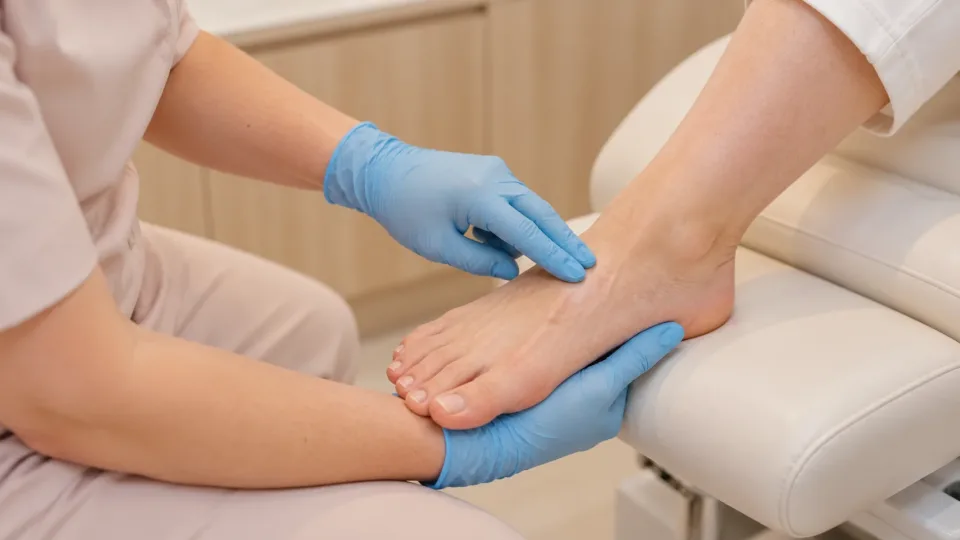
The appointment starts by locating the pain, understanding how it has evolved and reviewing your activity and footwear. The examination makes it possible to assess mobility, sensation, painful areas and the relationship between how you load the foot and your symptoms, depending on each case.
When it is necessary to study how you load the foot, a gait assessment may be indicated. It does not replace the tests needed to rule out a bone injury, nor does it mean you will need insoles.
If the discomfort is linked to running, training or returning to sport, sports podiatry makes it possible to review those changes in load and the footwear. The plan is decided after the examination and may require coordination with other professionals.
If a bone injury is suspected, imaging tests or a referral may be needed. The American Academy of Orthopaedic Surgeons explains that some stress fractures do not show up on an initial X-ray. If the pain continues, a first normal X-ray should not close the assessment on its own.
Top-of-foot pain and assessment in Altea
At the clinic we can assess the foot, how you load it and your footwear to guide the next step. Bring the shoes you usually wear, your trainers and any insoles you already have, if you use them.
If the discomfort persists or comes back, you can request a podiatry assessment. The clinic reviews the request and confirms the appointment.
Sources
- Pain in the top of the foot (opens in a new tab) · National Health Service (NHS)
- Dolor en el pie (opens in a new tab) · MedlinePlus (U.S. National Library of Medicine)
- Extensor Tendonitis (opens in a new tab) · Cleveland Clinic
- Stress Fractures of the Foot and Ankle (OrthoInfo) (opens in a new tab) · American Academy of Orthopaedic Surgeons
- Ganglion cyst (opens in a new tab) · National Health Service (NHS)
- Signs of serious foot problems and foot infections (opens in a new tab) · Diabetes UK
Frequently asked questions
- Can it be the shoe even if it is my size?
- Yes. Besides length, depth, width and the fastening matter. Socks or an insole can change the space available. That it improves when you take the shoe off is useful information, but it does not confirm the diagnosis on its own.
- Should I worry if there is no swelling?
- The absence of swelling does not rule out every injury. Seek advice if the pain is concentrated in one spot, gets worse, comes back every time you walk or starts to appear at rest.
- Which exercises help with pain on the top of the foot?
- It depends on the cause. Before starting intense stretches or strengthening exercises, it is worth knowing which structure is affected. A programme suitable for a tendon may not be suitable for a bone injury.
- Will I need insoles?
- Not necessarily. They are considered when the findings of the examination justify changing how the load is distributed. In other cases the footwear needs adjusting, the activity adapting or a different injury treating.
- Does a normal X-ray rule out a stress fracture?
- Not always, especially at the start. If the pain persists or the examination keeps the suspicion open, the professional will decide whether follow-up or another test is needed. An MRI is not necessary in every case.
Related posts
-
Why a callus keeps coming back in the same spot
If the callus returns after it has been removed, the pressure that formed it is still there. What causes it, what not to do at home and when to ask for an assessment.
-
Why your heel hurts when you get up in the morning
The first steps of the day are the worst and then it eases. That pattern is very characteristic, although on its own it is not enough to know what the problem is.
-
Itchy skin between your toes after going back to closed shoes
Itching, white or peeling skin between the toes when you go back to closed shoes: what may lie behind it, what you can do from today and when to have it assessed. And if you feel embarrassed to show your feet, you can come just as you are.